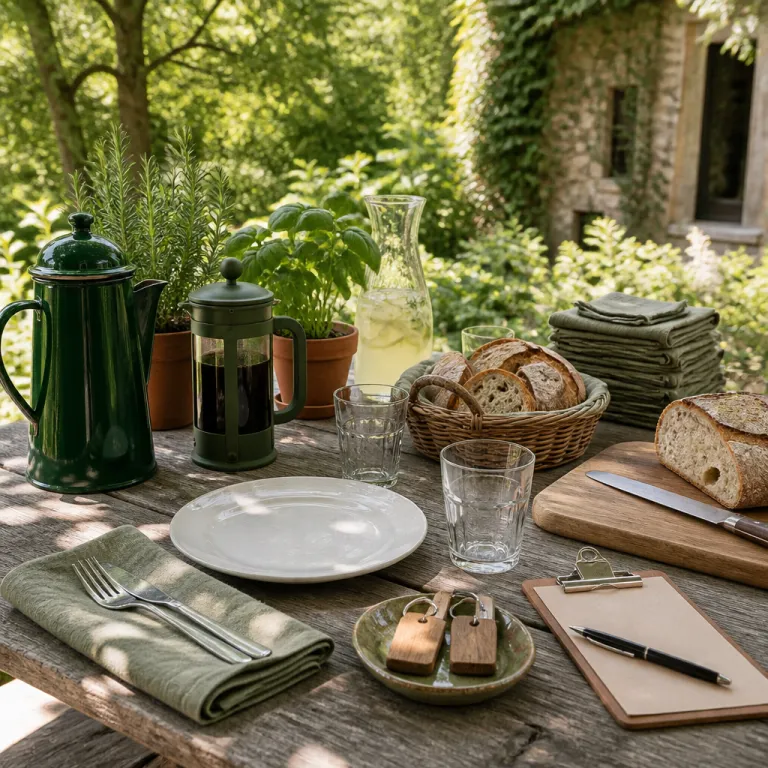
From bedroom to terrace: how the summer B&B day unfolds
On a hot Provençal morning, the real luxury is not the thread count but the first outdoor dining moment in the garden. Your host will often invite you to skip main street cafés and instead wander past cobbled streets to a shaded courtyard where the main content of the stay quietly becomes the table. This is where an outdoor breakfast in a European B&B garden turns from simple amenity into the defining experience of a summer stay.
Breakfast usually starts as the air is still cool, with a long dining table laid under plane trees or on a stone terrace with wide views over lavender fields. You might begin the day with freshly squeezed orange juice, still misted from the fridge, and a basket of freshly baked croissants that give full credit to the village boulangerie. Hosts in Provence, Tuscany and Andalusia increasingly structure the hour around local produce, reflecting the broader farm to table trend that hospitality analysts describe as one of the fastest growing segments in food-led travel; for example, the Hospitality Trends Report 2023 notes that roughly 6 in 10 small European properties now highlight local sourcing in their breakfast descriptions (p. 42).
Many B&B owners treat this first meal as a gentle briefing for your journey, using the outdoor spaces as an informal concierge desk. One host in the Luberon summed it up simply when asked why guests prefer to eat outside in summer; she replied, “Why do people prefer outdoor dining in summer? Enjoy fresh air, pleasant weather, and scenic views.” That attitude shapes everything from the relaxed pace to the way the living space flows seamlessly into outdoor living areas that feel usable almost year round.
Families notice the difference immediately, because children can move between the private garden and the dining table without the hush of a formal hotel restaurant. In Tuscany, a converted farmhouse might offer a dedicated dining pergola beside a small pool, giving parents clear views while children play within a few metres. Across southern Europe, occupancy reports from regional B&B associations such as Gîtes de France and the Associazione Italiana Bed & Breakfast suggest that high-season stays in rural guesthouses are strongly influenced by terrace and garden facilities, and owners often credit their outdoor dining offers as a key reason guests book and then return.
Provence, Tuscany, Andalusia: three regions that live at the outdoor table
In Provence, the archetypal scene is a stone house framed by a garden of rosemary and fig trees, where outdoor dining stretches from breakfast to the golden hour apéritif. Hosts often design a modern yet warm terrace with flexible outdoor spaces, so the same area can hold a quiet family meal or a communal table for ten. Here, al fresco dining in southern Europe is less about show and more about rhythm; the day is punctuated by plates and glasses rather than check in and check out times.
By late afternoon, the terrace becomes a tasting room, with local rosé wine poured as a signature cocktail alternative and small plates of olives and tapenade appearing almost by instinct. Many of these properties work closely with nearby vineyards, echoing the terroir-driven approach highlighted on our B&B wine trail guide, where the character of the land shapes not just the glass but the entire stay. As the sun drops, terrace views turn into genuinely memorable panoramas, and guests often linger for a simple tasting menu built around grilled vegetables, goat cheese and herbs picked from the garden minutes earlier.
Tuscany brings a different texture, with long tables set under vines and views rolling out towards the sea or over orderly rows of Sangiovese. Here, the outdoor dining experience often borrows from the region’s agriturismo culture, so the menu might change daily depending on what the host has sourced from local farmers’ markets. Some B&Bs even invite guests along on the morning market run, turning a routine chore into a shared experience that deepens the connection between plate, producer and place.
In Andalusia, whitewashed cortijos wrap around internal courtyards that stay surprisingly cool, creating a private outdoor living space shielded from the fiercest heat. Dinner might be served at a dedicated dining corner beside a small fountain, with grilled fish nodding to the nearby sea and jugs of freshly squeezed lemonade replacing heavier drinks. Whether you choose Provence, Tuscany or Andalusia, the common thread is that outdoor meals at small European guesthouses offer a more relaxed, family friendly alternative to a traditional starred restaurant or Michelin starred dining room, without sacrificing a sense of luxury.
Communal tables, sourcing rituals and the social architecture of the meal
One of the quiet revolutions in outdoor dining at European B&Bs is the return of the long communal table. Many owners now arrange a single dining table under string lights, inviting guests who booked separately to share a meal and, often, the story of their journey. It is social architecture in its simplest form; the space itself nudges strangers into conversation.
These evenings usually begin with a house signature cocktail, perhaps a vermouth spritz in Catalonia or a chilled local wine in Chianti, served in the same outdoor living area where breakfast unfolded. Children drift between the living space indoors and the garden, while adults settle into the warm glow of lanterns and the easy pace of a home style tasting menu. The atmosphere feels more like a relaxed dinner party than a hotel restaurant, yet the attention to detail can rival a starred restaurant when a host has trained in a Michelin starred kitchen.
Sourcing is part of the theatre, and many hosts are transparent about where each ingredient comes from, giving full credit to farmers, cheesemakers and fishermen by name. Some will show you the herb beds beside the terrace, or point out the olive groves that produced the oil on the table, turning the outdoor spaces into a living map of the local food system. For guests who care about eco friendly practices and farm to table dining, this level of openness builds trust and reinforces why they chose a small property over a larger hotel.
The practical side matters too, especially for families weighing whether to book half board or rely on restaurants along the cobbled streets. When a B&B says dinner is included, it often means a set menu served at the host’s garden table, with a fixed hour and a limited but thoughtful choice of dishes. If you are unsure whether that format suits your family, our guide on why some European B&Bs work for a family of four and others quietly do not offers a clear framework for assessing layout, flexibility and the way outdoor dining is handled.
How to choose and book the right summer B&B for outdoor dining
Choosing the right property for outdoor dining in a European summer starts long before you arrive at the gate. When you book, read descriptions carefully and look for explicit mentions of terrace views, garden seating and year round usable outdoor spaces rather than generic references to a patio. Photos should show where the dining table sits in relation to the pool, the rooms and any shared living space, so you can judge how private or social the experience will feel.
For families, the most comfortable setups usually offer a warm, semi private corner for dedicated dining, with clear views of where children might play and easy access back to rooms for an early bedtime. Ask whether breakfast includes freshly squeezed juice and freshly baked pastries, and whether the menu can adapt to younger palates without losing its local character. It is also worth checking if dinner is served every night or only on certain days, and whether there is a credit system if you skip a meal to try a nearby restaurant.
From a practical standpoint, remember that outdoor dining is weather dependent even in high summer, so flexible hosts will have a covered terrace or indoor space that still feels connected to the garden. Industry observers note that interest in eating outside has risen noticeably in recent seasons, and B&Bs that invest in comfortable furniture, good lighting and weather resistant tableware tend to see higher guest satisfaction; the Hospitality Trends Report 2023 links this kind of investment to repeat booking rates that are around 15% higher for properties with well designed outdoor dining areas (p. 57). Many owners now partner with local farmers and artisans to keep menus seasonal, which not only supports the community but also offers guests a more authentic experience than a standard hotel buffet.
Before you confirm, ask simple, specific questions by email; what time is the main meal, how many guests usually share the table, and is wine pairing available with local bottles that reflect the surrounding landscape. Clarify whether there is a quiet hour policy on the terrace, especially if your children go to bed early or you prefer late night conversations under the stars. With a little preparation, the outdoor dining offers at your chosen B&B will not just complement your stay, they will become the part you remember long after the sea views and hillside panoramas have faded from your camera roll, leaving you surrounded by vivid memories of meals that anchored each day.
FAQ
What is outdoor dining at a B&B in summer ?
Outdoor dining at a B&B in summer means eating meals outside, often in patios or gardens, using spaces that have been set up with comfortable seating and lighting. In southern Europe, this usually includes breakfast on a terrace, an afternoon drink in the garden and dinner at a shared or private table under the open sky. Many properties design their outdoor living areas so that the transition between indoor and outdoor space feels seamless.
Why do guests prefer outdoor dining during a summer stay ?
Guests often prefer outdoor dining in summer because they can enjoy fresh air, pleasant weather and scenic views while they eat. This is especially true in regions like Provence, Tuscany and Andalusia, where gardens, courtyards and terraces frame the landscape and create a sense of place. Families also appreciate the more relaxed atmosphere compared with formal indoor hotel restaurants.
How do B&Bs enhance the outdoor dining experience for families ?
B&Bs enhance outdoor dining for families by creating flexible spaces where children can move between the garden and the table without disturbing other guests. Hosts may offer early meal times, simplified dishes alongside the main menu and safe, enclosed outdoor spaces that remain visible from the dining area. This combination of thoughtful layout and personalised service often makes a B&B more comfortable for families than a larger hotel.
What should I check before booking a B&B for its outdoor dining ?
Before booking, review photos and descriptions to confirm there are real outdoor spaces for meals, such as terraces with views, shaded courtyards or gardens with proper tables and chairs. Ask the host whether breakfast and dinner are served outside by default, how they handle bad weather and whether menus highlight local, seasonal produce. It is also wise to check if drinks like wine or a signature cocktail are included, and whether there are options for children or guests with dietary requirements.
Are outdoor meals at B&Bs usually included in the room rate ?
Breakfast is often included in the room rate at European B&Bs, while dinner may be offered as an optional extra or on specific nights only. Some properties provide set menus at a fixed price, sometimes with a small credit if you choose to eat elsewhere, so it is important to clarify these details before confirming. Clear communication about what is included helps you plan your budget and avoid surprises once you arrive.
Sources
National and regional B&B associations in France, Italy and Spain (industry commentary on summer season occupancy and guest preferences), including Gîtes de France and the Associazione Italiana Bed & Breakfast.
Hospitality Trends Report 2023 (analysis of outdoor dining popularity and farm to table growth in small-scale accommodation, especially pp. 42 and 57).
Market analyses from leading hospitality consultancies on experiential and food led travel in southern Europe, as summarised in our B&B wine trail guide and our family of four suitability checklist.