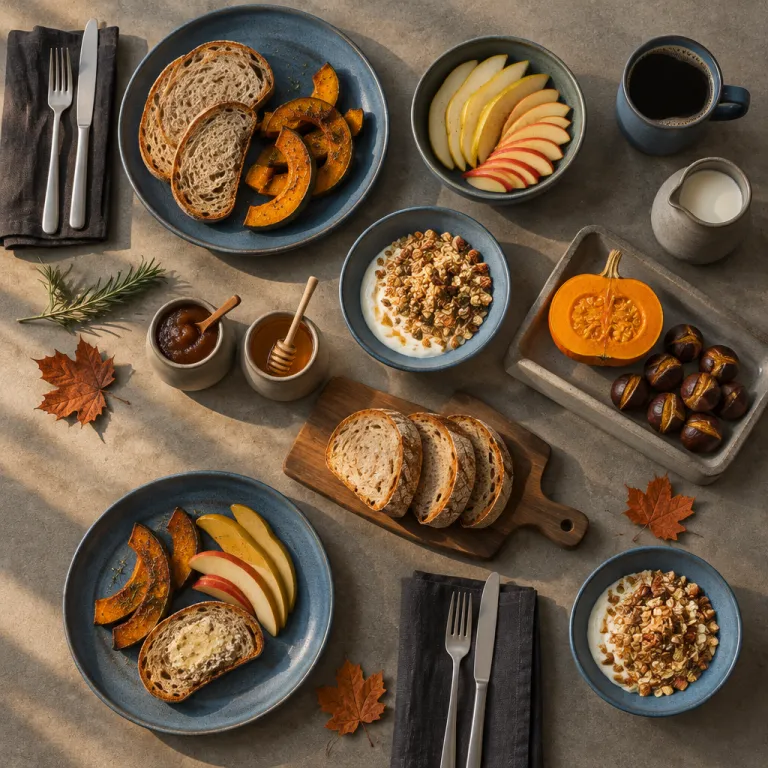
Reading place on the plate: what an autumn breakfast should hold
An authentic autumn B&B breakfast with seasonal local produce begins before you even taste it. The most attentive hosts build the morning table around what nearby farms are harvesting in fall, not what a wholesaler can truck in from another climate. Look for a quiet abundance of late fruit, warm bread and eggs that feel like they came from a coop just beyond the hedge, plus small touches like local yogurt, farmhouse butter and fresh-pressed juice.
On a strong morning spread, you might see apples and pears from early September orchards, alongside plums, quince or berries baked into a simple cake or folded through a warm salad of grains and greens. In Normandy, for example, one host near Cambremer serves buckwheat porridge with roasted orchard apples, hazelnuts and cream from the village dairy each October, explaining that “if it was at the market on Friday, it is on the table by Sunday.” A thoughtful cook might pair roasted beets and kale with soft cheese, turning humble greens into a vegetarian dish that feels both regional and refined.
True seasonal produce shows up in small, specific ways that reflect the week’s harvest. You might find fennel shaved thin over a citrus salad, or sweet potatoes roasted with basil lemon butter beside farm eggs as the main plate, with mushrooms or leeks sautéed in the same pan. In cooler regions, winter squash and the last summer squash overlap briefly, so a host may serve both in one dish, with pea shoots and chard sautéed in local oil for a green counterpoint that changes as the month goes on.
Luxury B&Bs that take terroir seriously often shop at the same farmers’ market you will visit later that day. In places like the Saturday market in Ludlow, England, potatoes, tomatoes and Brussels sprouts share crates with peppers, storage onions, cantaloupe, honeydew and late berries at stalls such as Ludlow Farmshop or small family growers, all of which can reappear at breakfast in both savory and dessert style recipes. When cider donuts sit next to pumpkin spice granola or a slice of apple pie, you are not just eating sugar; you are reading the landscape in crumbs and crusts, tasting a seasonal breakfast menu that mirrors the countryside outside the window.
The homemade jam test and other quiet signals of real cooking
The simplest way to judge an autumn B&B breakfast with seasonal local produce is to look at the jam jar. If the label lists a nearby village and the host can tell you which apples, berries or plums went in, you are probably in a kitchen that cooks rather than reheats. When the jam shifts from strawberry in July to apple-pear, damson or plum by late September, that is your first sign that the B&B is following the fields, not a frozen delivery schedule, and that the morning spread is genuinely farm-to-table.
Homemade spreads often sit beside a small salad of garden greens, maybe kale and pea shoots with lemon dressing, or roasted beets in a red glaze that stains the plate. A confident cook will use sweet potato mash or cubes of sweet potatoes with herbs as a warm base under poached eggs, turning side vegetables into the main attraction. You might also see winter squash purée, cauliflower and chard gratin or a slow-cooked pepper and winter vegetable ragout, all of which show that the host understands how to move from light summer dishes to deeper autumn flavors and build a seasonal breakfast menu that feels intentional.
Pay attention to how fruit is handled across the table. Apples may appear stewed with basil lemon syrup, baked into apple pie, or sliced fresh beside cantaloupe, honeydew and late grapes for a simple dessert plate, while pears might be poached with spices or tucked into a rustic tart. When caramel apples are sliced over yogurt or folded into ice cream, it signals a kitchen that respects childhood treats while still cooking with seasonal produce gathered in the last warm weeks.
To go deeper into these signals, read this guide on how to read a B&B breakfast before you book. It will help you distinguish between a decorative local basket and a table where potatoes, tomatoes, Brussels sprouts and farmers’ market bread actually come from named producers. Once you start noticing whether apple sauce is poured from a carton or spooned from a chipped ceramic bowl, and whether granola smells freshly toasted, you will never look at a breakfast buffet the same way again.
Producer relationships: when hosts name their eggs, honey and bread
In the premium B&B world, the most telling luxury is not marble bathrooms but the way a host talks about their suppliers. A serious autumn B&B breakfast with seasonal local produce usually comes with a story about the hens that laid your eggs or the mill that ground your flour. When a host can name the farm where the apples grew or the beekeeper who made the honey, you are in the right place; as one Cambremer owner puts it, “if I would not serve it to my neighbors, I will not serve it to my guests.”
Listen for specifics as the coffee is poured and the salad plates arrive. A host might mention that the kale, mixed greens and pea shoots came from the Saturday farmers’ market, while the Brussels sprouts and winter squash were traded for a weekend stay. They may explain that the sweet potato hash and roasted sweet potatoes on your plate are from a neighbor who also supplies potatoes, tomatoes and cool-season peppers to local restaurants, and that these deliveries peak from late September through early November, shaping the farm-to-table breakfast menu week by week.
Fruit and dairy tell their own stories at the harvest table. Apples and pears might be poached in basil lemon syrup, served with a spoon of thick yogurt from a nearby creamery as a light dessert after the main dish. On another morning, you could be offered ice cream made with apple sauce and pumpkin spice, or a slice of apple pie with caramel apples on the side, all built from the same seasonal produce you saw piled high at the market the previous day and transformed into different breakfast desserts.
These relationships matter even more when you are booking an entire property for a milestone trip, as explained in this piece on taking a whole B&B for a celebration. Multi generation groups notice when cantaloupe, honeydew, fennel and chard appear in both vegetarian and meat based recipes, or when a host adjusts the main breakfast dish for different ages. For a deeper look at how shared tables shape family travel, the article on three generations at one breakfast table shows why these producer stories become part of your own.
How to ask about breakfast before booking, without sounding fussy
Before you reserve, it is entirely fair to ask how a property handles its autumn B&B breakfast with seasonal local produce. The key is to frame your questions around curiosity and dietary needs rather than judgment, which most experienced hosts will appreciate. A short message can reveal whether you will be eating frozen pastries or a breakfast shaped by September orchards and winter gardens, and whether the morning menu really reflects a seasonal, farm-to-table approach.
Start by asking what a typical fall morning plate might include for both vegetarian and omnivore guests. A thoughtful reply might mention a warm salad of kale and greens, roasted beets with goat cheese, or a main dish built around sweet potato hash and eggs. You can also ask whether they use seasonal produce from a farmers’ market, and whether apples, winter squash, cool-weather peppers or Brussels sprouts feature regularly on the menu, along with other autumn staples like leeks, mushrooms or late herbs.
If you care about sweets, be specific about what you enjoy. Ask whether they ever serve apple pie, caramel apples, cider donuts or pumpkin spice granola as part of breakfast dessert options, and whether ice cream or yogurt appears with fruit like cantaloupe, honeydew or apples. Hosts who cook will usually light up when talking about their favorite recipes, from basil lemon syrup for fruit to cauliflower and chard gratin or potatoes and tomatoes baked with herbs, and may even share how their seasonal breakfast menu changes from early to late autumn.
Finally, remember that autumn is when the gap between marketing and reality is widest at the breakfast table. Summer and winter menus can lean on storage and imports, but fall and late summer weeks are when orchards, gardens and hedgerows are at their most generous. If a property cannot say how its apple sauce is made or where its greens come from, you may want to keep scrolling until you find a B&B whose harvest table tells a clearer story of place and whose autumn B&B breakfast with seasonal local produce genuinely reflects the region.
FAQ
What should a genuinely local autumn B&B breakfast include ?
A genuinely local autumn breakfast should feature late fruit like apples and pears, eggs from nearby farms and bread from a regional bakery. You should also see vegetables such as kale, leafy greens, beets, sweet potatoes, winter squash and Brussels sprouts prepared as both side dishes and main plates, with occasional additions like leeks, mushrooms or fennel. When these ingredients match what is available at the local farmers’ market, you are likely eating true seasonal produce and a thoughtfully curated seasonal breakfast menu.
How can I tell if a B&B really cooks rather than reheats ?
Look for homemade elements such as jam with visible fruit, apple sauce in ceramic bowls and baked goods that are not uniform in shape. Ask casually whether the host makes dishes like sweet potato hash, cauliflower and chard gratin or apple pie on site, and where the apples or greens come from. If they can name farms, markets or specific producers and describe how the autumn B&B breakfast with seasonal local produce changes through the season, the kitchen is probably cooking from scratch.
Is it reasonable to ask about breakfast before booking a stay ?
Yes, it is entirely reasonable to ask about breakfast before confirming a reservation, especially at a premium B&B. You can politely inquire whether they serve an autumn B&B breakfast with seasonal local produce, and whether they can accommodate vegetarian preferences or food allergies. A detailed, enthusiastic answer usually signals a host who takes the morning table seriously and treats breakfast as a core part of the stay rather than an afterthought.
What is the difference between a decorative local basket and a real harvest table ?
A decorative local basket often contains packaged items with regional labels but little connection to the week’s harvest. A real harvest table uses ingredients like apples, fennel, pea shoots, potatoes, tomatoes and cool-season peppers in cooked dishes, salads and desserts that change through September and into winter. When the menu shifts with the seasons and the host can explain those changes, you are seeing a true reflection of place and a genuinely seasonal breakfast menu rather than a static display.
Why does autumn matter more than other seasons for B&B breakfasts ?
Autumn is when orchards, fields and gardens are at their most expressive, so breakfast can show the clearest link between land and table. During this period, apples, winter squash, sweet potatoes and late greens overlap with the last summer squash and cantaloupe, honeydew, giving hosts a wide palette for both savory and dessert recipes. A B&B that embraces this moment will offer a richer, more memorable sense of terroir than in any other season, and its autumn B&B breakfast with seasonal local produce will often become the highlight of the stay.