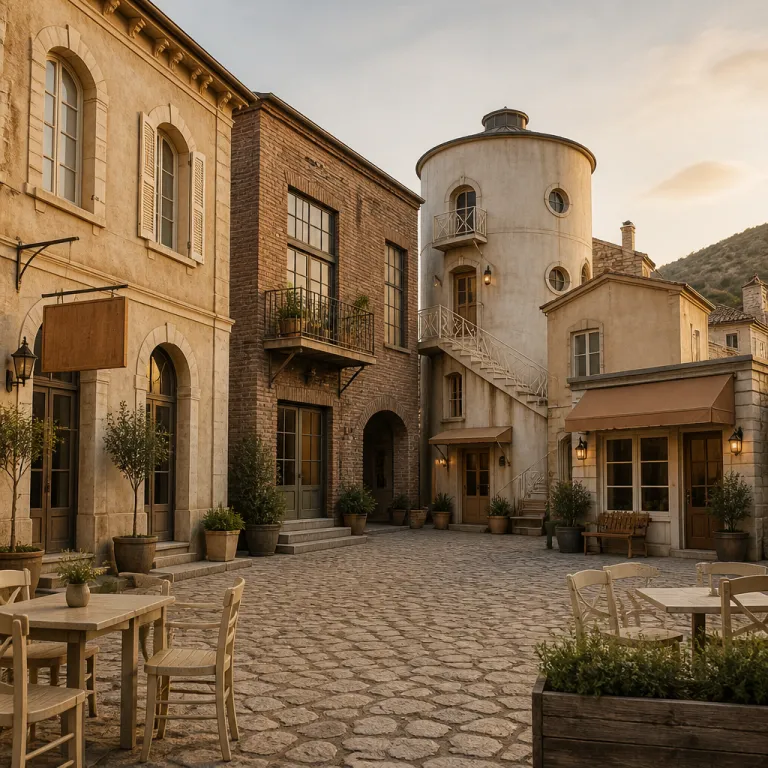
Why unexpected buildings create richer B&B stays
A former school or post office turned into a B&B feels instantly human. The scale of the original building is usually modest, so adaptive reuse BB converted buildings can offer intimacy rather than grand theatre. You arrive not to a marble lobby, but to a front door that once opened onto everyday life.
These smaller historic buildings were often built for community, which quietly suits high service standards. When architects and owners approach an adaptive reuse project as hospitality first and construction puzzle second, the results feel effortless rather than themed. The Woolverton Inn in New Jersey, for example, shows how a historic farmhouse can be carefully adapted into housing for guests without losing its agricultural soul.
Unexpected conversions also carry stronger stories than predictable palazzi or châteaux. A former american glassworks or a relocated log house such as Hisrich Hills House in Ohio turns each floor and corridor into a narrative about craft, migration, or industry. For business leisure travelers, that narrative becomes a soft power networking tool at breakfast, where a good host can explain how the existing buildings once anchored local economies.
From a sustainability perspective, these adaptive reuse BB converted buildings preserve embodied energy and reduce demolition waste. Instead of new construction, the project team works with existing walls, beams, and staircases, often retaining more than half of the original structure. That choice aligns with the broader rise in adaptive reuse projects across the United States, where thousands of units have shifted from offices or industrial housing into apartments and guest rooms.
From post office to pillow menu: how architects make it work
Turning a post office, chapel, or cultural center into a B&B is not a decorative exercise. It is a technical adaptive reuse project that asks architects to reconcile heritage, modern codes, and the quiet luxury your expense account expects. The most successful adaptive reuse BB converted buildings start with a forensic reading of the existing structure before a single mood board appears.
Architects begin by mapping the original circulation and structural grid of the building. Former mail sorting halls, school corridors, or clinic wings often have generous space and high ceilings, but they may lack the plumbing stacks needed for multiple en suite rooms. A skilled project team will thread new services through floor voids and roof spaces, keeping reuse work largely invisible while preserving historic beams, brickwork, and staircases.
Recent hospitality conversions of cultural buildings in Kyoto and a health center in Manhattan show how far this approach can go. In both projects, the design teams retained key historic volumes, then inserted guest rooms as carefully detailed apartments within the shell. That same logic underpins standout heritage B&Bs worldwide, including the reimagined convent in Florence covered in our feature on a 16th century convent reopening as a design led stay.
For you as a guest, the technical complexity should vanish behind a feeling of ease. When adaptive reuse BB converted buildings are handled well, you notice the way light falls through original windows onto a perfectly level oak floor, not the fire door rating. That invisible construction discipline is often guided by professionals with credentials such as AIA or NCARB, who understand both preservation standards and contemporary comfort.
Reading the building: authenticity versus costume drama
Not every conversion of a historic building into a B&B respects its past. Some projects lean on theatrical décor, turning adaptive reuse into costume rather than genuine preservation. As a traveler, you can read the signs in a few minutes.
Start with the bones of the building, not the throw pillows. Authentic adaptive reuse BB converted buildings keep original staircases, window proportions, and at least some exposed structure, even if finishes are refreshed. If every surface feels new and generic, the project may have treated the shell as a stage set rather than a partner in the design.
Look next at how the former use is acknowledged. In a converted school, for example, the best projects retain blackboards, cloakroom hooks, or gym flooring, then weave them into calm, grown up interiors. A former mill or glassworks might keep gantry cranes or brick kilns as sculptural elements in shared space, rather than hiding them behind drywall.
Properties such as Old Mill Settlement, where log cabins have been transformed into a B&B, show how creative reuse work can feel both luxurious and grounded. Here, the project team preserved the texture of the original construction while upgrading insulation, bathrooms, and lighting to contemporary standards. For more on why heritage buildings make such characterful B&Bs, our guide to heritage buildings that become standout B&Bs explores this balance in depth.
The sustainability and economics behind adaptive reuse B&Bs
Adaptive reuse is not just a design trend ; it is a carbon strategy. Repurposing an existing building for a B&B preserves the embodied energy in its masonry, timber, and steel, avoiding the emissions of demolition and new construction. Across the United States, tens of thousands of adaptive reuse projects have shifted underused offices and industrial buildings into housing and hospitality, reflecting this logic.
For owners and operators, adaptive reuse BB converted buildings can also unlock financial advantages. In many american cities, historic tax credits reward sensitive restoration, helping to offset the higher upfront cost of working with old fabric. A well structured reuse project can therefore compete with ground up construction on total project cost, especially when the site already has utilities and transport connections.
The environmental case is straightforward. Reusing an existing structure typically reduces material extraction, manufacturing, and transport, while cutting construction waste that would otherwise head to landfill. When a project team combines this with efficient systems and thoughtful insulation, the operational footprint of the B&B can be significantly lower than a comparable new build.
Guests increasingly care about this, even at the luxury end of the market. Business leisure travelers may not want a lecture on embodied carbon at check in, but they appreciate when a host can explain how the building was built, what has been preserved, and how adaptive reuse supports the local community. That story, when honest and specific, becomes part of the value proposition, not a marketing slogan.
How to choose an adaptive reuse B&B that actually works
When you scroll through listings of adaptive reuse BB converted buildings, focus less on adjectives and more on plans. A clear floor layout, with generous room sizes and logical circulation, usually signals that architects have led the design rather than decorators. If you can, look for clues that the project team included preservation specialists as well as hospitality professionals.
Comfort still matters more than concept, especially when you are arriving after meetings or a long flight. Check whether the B&B has invested in acoustic insulation, blackout solutions, and high quality mattresses, which are harder to retrofit into rigid historic shells. Our guide to what actually matters in sleep focused design explains how to read between the lines of room descriptions.
Pay attention to how the property talks about its reuse work. Serious operators will mention the architects by name, outline the phases of the project, and explain which original elements were retained or reconstructed. They may reference collaboration with local artisans or preservation societies, echoing the approach seen at places like Woolverton Inn or Old Mill Settlement.
Finally, ask direct questions before you book. How many rooms were created within the existing building, and are any in new construction wings ? Were there structural constraints that shaped the design of the apartments or suites ? The most trustworthy hosts answer with specifics, not vague lifestyle language, because they know that adaptive reuse is both a creative act and a long term commitment to the building.
FAQ
What is adaptive reuse in the context of B&Bs ?
Adaptive reuse in hospitality means repurposing an existing building, often historic, into a new use such as a bed and breakfast. Instead of demolishing the structure, architects and owners retain significant original elements while upgrading services, safety, and comfort. As one expert definition puts it, “What is adaptive reuse?” and the answer is, “Repurposing existing buildings for new uses.”
Why convert historic buildings into B&Bs rather than build new ones ?
Converting historic buildings into B&Bs preserves local heritage while creating distinctive places to stay. These projects often revitalize underused sites, support nearby businesses, and tap into historic tax credits that reward sensitive restoration. As another verified explanation notes, “Why convert historic buildings into B&Bs?” and the answer is, “To preserve heritage and attract tourists.”
Are adaptive reuse B&Bs more sustainable than new construction ?
Adaptive reuse B&Bs are generally more sustainable because they conserve the embodied energy in existing walls, roofs, and structures. By avoiding demolition and reducing the need for new materials, they cut both waste and carbon emissions associated with manufacturing and transport. This aligns with the statement, “Are adaptive reuse B&Bs sustainable?” and the answer is, “Yes, they reduce waste and conserve resources.”
What types of buildings work best for adaptive reuse B&B projects ?
Medium scale buildings with strong character and good structural bones tend to convert best into B&Bs. Former schools, farmhouses, post offices, mills, and small civic buildings often have generous ceiling heights, flexible floor plates, and central locations. Their original design for community use also translates naturally into shared lounges, breakfast rooms, and gardens.
How can I tell if an adaptive reuse B&B is well designed before booking ?
Look for clear photos of original features alongside evidence of modern upgrades, such as well detailed bathrooms and discreet climate control. Read how the property describes its project team, architects, and reuse work, and check reviews for comments on noise, comfort, and layout. When a B&B explains what was preserved, what was rebuilt, and why, it usually signals a thoughtful, guest focused conversion.